Thinking about adopting Salesforce but unsure about the real Salesforce CRM cost? You’re not alone. Many businesses get blindsided by hidden fees, confusing pricing tiers, and unexpected add-ons. Let’s break down exactly what you’ll pay—and why.
Understanding the Core Salesforce CRM Cost Structure

Salesforce doesn’t use a one-size-fits-all pricing model. Instead, it offers a tiered system based on functionality, user count, and deployment needs. The Salesforce CRM cost can range from a few dollars per user per month to hundreds, depending on which edition you choose. Understanding this structure is the first step to making a smart investment.




Salesforce Editions and Their Base Pricing
Salesforce offers several main editions, each tailored to different business sizes and needs. These include Essentials, Professional, Enterprise, and Unlimited. Each comes with a different Salesforce CRM cost and feature set.
- Essentials: Priced at $25/user/month, this is the entry-level option for small businesses. It includes basic CRM features like contact management, email integration, and lead tracking.
- Professional: At $80/user/month, this edition adds workflow automation, customizable reports, and territory management—ideal for growing teams.
- Enterprise: Priced at $165/user/month, it offers full customization, API access, and advanced analytics. This is where most mid-sized to large companies land.
- Unlimited: At $360/user/month, this top-tier plan includes 24/7 support, sandbox environments, and premium features for enterprise scalability.
These base prices are just the starting point. Additional features, user roles, and integrations can significantly increase the final Salesforce CRM cost.
Per-User vs. Per-Feature Pricing Models
While Salesforce primarily uses a per-user pricing model, certain features are billed separately. For example, Salesforce Platform licenses allow developers to build custom apps without full CRM access, priced at $500/month per org. This hybrid model means your Salesforce CRM cost isn’t just about how many people use it—but what they’re allowed to do.
“The true cost of Salesforce isn’t in the sticker price—it’s in how you configure and scale it.” — CRM Industry Analyst, Gartner
Hidden Costs Often Overlooked
Many companies underestimate the total Salesforce CRM cost because they don’t account for:
- Implementation fees (often $5,000–$50,000+ depending on complexity)
- Customization and integration with third-party tools
- Training and change management for employees
- Annual contract discounts vs. monthly billing differences
- Cost of Salesforce consultants or partners
These can add 30–100% to your initial budget, making it crucial to plan holistically.
Breaking Down the Salesforce CRM Cost by Business Size
The Salesforce CRM cost varies dramatically depending on whether you’re a startup, SMB, or enterprise. Let’s explore how pricing scales across different business types.
Cost for Small Businesses (1–50 Users)
Small businesses typically start with Salesforce Essentials or Professional. For a team of 10 users on the Professional edition:
- Base cost: 10 users × $80 = $800/month
- Implementation: ~$7,000 (one-time)
- Training: ~$2,000
- Total first-year cost: ~$18,600
This makes the effective annual Salesforce CRM cost around $1,860 per user over the first year when factoring in setup.
Cost for Mid-Sized Companies (51–500 Users)
Mid-sized firms often require the Enterprise edition for customization and API access. For 100 users:
- Base cost: 100 × $165 = $16,500/month
- Implementation: $25,000–$75,000
- Integration with ERP, marketing tools, etc.: $15,000+
- Annual support or managed services: $30,000+
- Total first-year cost: ~$275,000–$350,000
That’s an average of $2,750–$3,500 per user annually—significantly higher than the base subscription.
Cost for Large Enterprises (500+ Users)
Enterprises usually opt for Unlimited or custom contracts. Salesforce often negotiates enterprise agreements (EAs) that bundle multiple clouds (Sales, Service, Marketing, etc.).
- Base subscription: Can exceed $500,000/year
- Custom development: $100,000–$500,000+
- Dedicated consultants and admins: $150,000+/year
- Compliance and security audits: $20,000+
With all-in costs potentially reaching $1M+/year, the Salesforce CRM cost becomes a major line item in the IT budget. However, ROI from improved sales efficiency and customer retention can justify the investment.
Salesforce CRM Cost Across Different Clouds
Salesforce isn’t just a CRM—it’s a suite of interconnected clouds. Each adds to the overall Salesforce CRM cost. Let’s examine the major ones.
Sales Cloud Pricing and Features
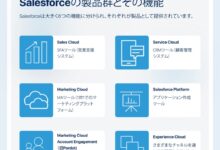
Sales Cloud is the core CRM platform. Its pricing aligns with the editions mentioned earlier:
- Essentials: $25/user/month
- Professional: $80/user/month
- Enterprise: $165/user/month
- Unlimited: $360/user/month
It includes lead and opportunity management, forecasting, email integration, and mobile access. Most companies start here, but often need to expand.
Service Cloud: Support and Customer Service Add-On
Service Cloud enhances CRM with case management, knowledge bases, and omnichannel support. Pricing starts at:
- Einstein Service Basics: $25/user/month
- Professional: $75/user/month
- Enterprise: $150/user/month
- Unlimited: $300/user/month
If you’re already using Sales Cloud Enterprise ($165), adding Service Cloud Enterprise brings the combined cost to $315/user/month. That’s a 91% increase just for support functionality.
Marketing Cloud: Email, Automation, and Analytics
Marketing Cloud is priced very differently—it’s not per-user but based on contacts, send volume, and features used. Entry-level plans start at $1,250/month, but most businesses pay $2,500–$10,000/month.
Key cost drivers include:
- Email sends (e.g., $0.01 per email for 1M sends)
- Contact count (e.g., $0.01–$0.05 per contact/month)
- Journey Builder and Automation Studio usage
- Premium analytics and AI features
For a company with 500,000 contacts sending 5M emails monthly, Marketing Cloud can easily cost $15,000+/month—making it one of the most expensive Salesforce CRM cost components.
Implementation and Onboarding: The Real Salesforce CRM Cost Drivers
The subscription fee is just the tip of the iceberg. Implementation often accounts for 30–50% of the total Salesforce CRM cost in the first year.
DIY vs. Partner-Led Implementation
You can set up Salesforce yourself, but complexity increases with customization needs.
- DIY: Saves money but requires internal expertise. Risk of poor data migration or inefficient workflows.
- Partner-led: Certified Salesforce partners charge $150–$300/hour. A full implementation can take 200–500 hours, costing $30,000–$150,000.
For most businesses, partnering with a Salesforce consulting partner ensures smoother deployment and better long-term ROI.
Data Migration and Integration Expenses
Moving data from legacy systems (like Excel, HubSpot, or Zoho) into Salesforce requires cleaning, mapping, and validation.
- Simple migration (under 10,000 records): $2,000–$5,000
- Complex migration (100,000+ records, multiple systems): $15,000–$50,000
- Integration with tools like Slack, Zoom, or SAP: $5,000–$20,000 per integration
These are one-time but essential costs that directly impact the total Salesforce CRM cost.
Training and User Adoption Programs
Even the best CRM fails if users don’t adopt it. Training is critical.
- Basic user training: $500–$1,000 per user
- Admin and super-user training: $2,000–$5,000 per person
- Ongoing coaching and change management: $10,000+/year
Companies that invest in adoption see 3x higher ROI, according to Nucleus Research.
Customization, Add-Ons, and AppExchange: Hidden Salesforce CRM Cost Factors
One of Salesforce’s strengths is its flexibility. But every customization adds to the Salesforce CRM cost.
Custom Development and Workflow Automation
Need a unique approval process or custom dashboard? That requires development.
- Simple automation (e.g., email alerts): $1,000–$3,000
- Complex workflows with Apex code: $10,000–$50,000+
- Custom objects and fields: $5,000–$20,000
These costs are often recurring as business needs evolve.
AppExchange Apps and Their Impact on Budget
The Salesforce AppExchange offers thousands of third-party apps. While some are free, many are paid:
- DocuSign for Salesforce: $15/user/month
- Mailchimp for Salesforce: $20/user/month
- FinancialForce Accounting: $100+/user/month
- Gong Sales Intelligence: $100+/user/month
Adding just three popular apps can increase your Salesforce CRM cost by 50–100%. Always evaluate ROI before installing.
AI and Einstein Features: Premium Pricing
Salesforce Einstein AI offers predictive lead scoring, email insights, and forecasting. But it’s not included in base plans.
- Einstein Lead Scoring: $50/user/month
- Einstein Opportunity Insights: $75/user/month
- Einstein Analytics: $150–$300/user/month
For a 100-user team, adding Einstein Analytics could cost $180,000/year—more than the base CRM subscription itself.
Annual vs. Monthly Billing: How Payment Terms Affect Salesforce CRM Cost
Your payment schedule can significantly influence the total Salesforce CRM cost.
Discounts for Annual Commitments
Salesforce offers 10–20% discounts for annual prepayment. For a 50-user team on Enterprise:
- Monthly: 50 × $165 × 12 = $99,000
- Annual (with 15% discount): ~$84,150
- Savings: $14,850
That’s a substantial reduction just for committing upfront.
Multi-Year Contracts and Enterprise Agreements
For large deployments, Salesforce offers multi-year contracts (2–5 years) with deeper discounts (up to 30%) and bundled services.
- Volume licensing discounts
- Free training or support credits
- Guaranteed pricing (no annual increases)
These agreements lock you in but can save millions over time. Always negotiate terms with a procurement specialist.
Cash Flow Implications of Monthly vs. Annual Plans
While annual billing saves money, it requires significant upfront capital. Startups or cash-strapped businesses may prefer monthly plans despite higher costs.
- Monthly: Better cash flow, but 10–20% more expensive long-term
- Annual: Higher initial outlay, but better value
Consider your financial health and growth projections when choosing.
Alternatives and Cost-Saving Strategies for Salesforce CRM Cost
Is Salesforce worth the price? For many, yes—but there are ways to reduce the Salesforce CRM cost or explore alternatives.
Top Salesforce Competitors and Their Pricing
Several CRM platforms offer similar functionality at lower prices:
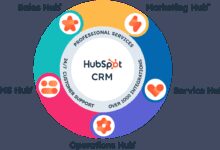
- HubSpot CRM: Free core features; paid plans start at $50/month (billed annually). Much simpler, but less scalable.
- Zoho CRM: Starts at $14/user/month. Excellent value for SMBs.
- Pipedrive: $14.90/user/month. Focused on sales pipelines.
- Microsoft Dynamics 365: $95/user/month. Strong integration with Office 365.
These can be 50–80% cheaper than Salesforce, but lack its ecosystem depth.
How to Reduce Your Salesforce CRM Cost
If you’re committed to Salesforce, here are proven cost-saving strategies:
- Negotiate with Salesforce: Most list prices are negotiable, especially for 50+ users.
- Start small, scale later: Begin with Essentials or Professional, upgrade as needed.
- Limit premium add-ons: Only enable Einstein or Marketing Cloud if ROI is clear.
- Use community editions: Nonprofits can get Salesforce for free via the Power of Us program.
- Optimize user licenses: Assign lower-cost licenses to users who only need read-only access.
One company reduced its Salesforce CRM cost by 40% simply by auditing user roles and downgrading 30% of licenses.
When to Consider a CRM Migration
If Salesforce is too expensive or complex, migration might make sense. But it’s not cheap:
- Data export and cleaning: $5,000–$20,000
- New CRM setup: $10,000–$50,000
- Training on new system: $5,000–$15,000
Only migrate if the long-term savings outweigh these transition costs. Otherwise, optimize your current setup.
What is the average Salesforce CRM cost for a small business?
The average Salesforce CRM cost for a small business (10 users) on the Professional edition is around $800/month for the subscription, plus $9,000–$15,000 for implementation and training. Total first-year cost typically ranges from $18,000 to $25,000.
Does Salesforce offer any free plans?
Salesforce does not offer a free plan for businesses, but it provides a free 30-day trial. Nonprofits can apply for free licenses through the Power of Us program. Additionally, developers can use a free Developer Edition for learning and testing.
How much does Salesforce Service Cloud cost?
Salesforce Service Cloud starts at $25/user/month for Einstein Service Basics and goes up to $300/user/month for the Unlimited edition. Most businesses using Service Cloud pay between $75 and $150 per user per month.
Can you negotiate Salesforce pricing?
Yes, Salesforce pricing is often negotiable, especially for annual or multi-year contracts with 50+ users. Discounts of 10–30% are common. It’s recommended to involve a procurement expert or Salesforce partner during negotiations.
What factors increase the total Salesforce CRM cost?
Key factors that increase the total Salesforce CRM cost include implementation fees, data migration, third-party integrations, custom development, premium features like Einstein AI, AppExchange apps, user training, and ongoing support or managed services.
Understanding the true Salesforce CRM cost goes far beyond the monthly subscription. From base editions to hidden implementation fees, add-ons, and long-term scalability, every decision impacts your bottom line. While Salesforce is a powerful tool, its cost demands careful planning and strategic investment. By evaluating your needs, negotiating wisely, and optimizing usage, you can maximize ROI and avoid budget overruns. Whether you’re a startup or an enterprise, knowing the full picture of Salesforce CRM cost empowers smarter decisions.
Further Reading: