Navigating CRM system pricing can feel like decoding a secret language. With so many options, tiers, and hidden costs, businesses often overpay—or underinvest. Let’s break down the real numbers, models, and strategies behind CRM pricing so you can make a smart, data-driven decision.
Understanding CRM System Pricing: What You’re Really Paying For

CRM system pricing isn’t just about the monthly fee per user. It’s a complex ecosystem of features, scalability, integration capabilities, and long-term value. Many companies mistakenly focus only on sticker price, only to face unexpected costs down the line. To truly understand what you’re paying for, you need to look beyond the surface.



Core Components of CRM System Pricing
The cost of a CRM system is built on several foundational elements. These include licensing fees, user tiers, storage, automation tools, and customer support. Each vendor structures these components differently, which is why two CRMs with similar base prices can deliver vastly different experiences.
- Licensing Models: Most CRMs use either a subscription-based or perpetual license model. Subscription models dominate the market today, especially with cloud-based platforms like Salesforce and HubSpot.
- User-Based Tiers: Pricing often scales with the number of users. Entry-level plans may cost as little as $10/user/month, while enterprise solutions can exceed $300/user/month.
- Feature Bundling: Vendors bundle features into tiers (e.g., basic, professional, enterprise), making it crucial to assess which features your business actually needs.
Hidden Costs in CRM System Pricing
What’s advertised isn’t always what you end up paying. Hidden costs can significantly inflate your total investment. These include onboarding fees, training, customization, third-party integrations, and data migration.
- Implementation Services: Some vendors charge thousands for setup, especially if you need custom workflows or API integrations.
- Support Tiers: Basic support may be included, but premium 24/7 support often comes at an extra cost.
- Add-On Modules: Features like advanced analytics, AI tools, or telephony integration are frequently sold as add-ons.
“The average company spends 130% of the initial CRM license cost on implementation and training within the first year.” — Gartner Research
Top CRM Platforms and Their Pricing Models
To make an informed decision, it’s essential to compare how leading CRM platforms structure their CRM system pricing. Each has unique strengths, target audiences, and cost implications.
Salesforce: The Enterprise Powerhouse
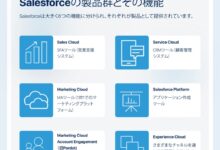
Salesforce dominates the CRM market with a comprehensive suite of tools. However, its CRM system pricing reflects its enterprise focus. Plans start at $25/user/month for Essentials but quickly escalate to $300+/user/month for Unlimited editions.
- Sales Cloud: Starts at $75/user/month, includes lead and opportunity management.
- Service Cloud: Begins at $80/user/month, ideal for customer service teams.
- Customization & APIs: Advanced customization requires additional fees or developer resources.
For detailed pricing, visit Salesforce Pricing Page.
HubSpot: The All-in-One Marketing-Centric CRM
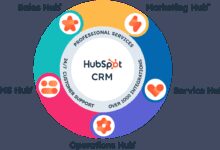
HubSpot offers a freemium model, making it attractive for startups and SMBs. The free CRM includes contact management, email tracking, and basic automation. Paid tiers unlock marketing, sales, and service hubs.
- Free Plan: Unlimited users, limited features—ideal for small teams testing the waters.
- Starter Plan: $45/month for up to 1,000 contacts, includes basic marketing tools.
- Professional & Enterprise: Ranges from $450 to $3,200+/month, offering advanced workflows, reporting, and AI features.
Explore more at HubSpot CRM Pricing.
Microsoft Dynamics 365: The Integrated Business Suite
Dynamics 365 blends CRM and ERP functionalities, making it ideal for organizations already using Microsoft 365. Its CRM system pricing is modular, allowing businesses to pay only for the apps they need.
- Sales Professional: $65/user/month, includes lead management and forecasting.
- Customer Service: $95/user/month, with case management and knowledge base tools.
- Field Service: $95/user/month, designed for technicians and dispatchers.
Learn more at Microsoft Dynamics Pricing.
Factors That Influence CRM System Pricing
Several key variables affect how much you’ll pay for a CRM. Understanding these can help you negotiate better deals and avoid overpaying.
Number of Users and Team Size
This is the most obvious factor in CRM system pricing. Most vendors charge per user per month. However, some offer volume discounts for larger teams. For example, Zoho CRM provides tiered pricing where the per-user cost decreases as you add more seats.
- Small teams (1–10 users): Often pay premium rates per user.
- Mid-sized teams (11–50 users): May qualify for small discounts.
- Enterprise teams (50+ users): Can negotiate custom contracts and bundled pricing.
Deployment Model: Cloud vs. On-Premise
The deployment method significantly impacts CRM system pricing. Cloud-based CRMs (SaaS) are typically subscription-based, while on-premise solutions require a large upfront investment.
- Cloud (SaaS): Lower initial cost, predictable monthly payments, automatic updates. Examples: Salesforce, HubSpot.
- On-Premise: Higher upfront cost for licensing and hardware, but more control over data and customization. Example: Oracle CRM On-Premise.
“By 2025, over 85% of new CRM deployments will be cloud-based, up from 60% in 2020.” — IDC Forecast
Integration and Customization Needs
If your CRM needs to sync with existing tools like ERP, email marketing, or accounting software, integration complexity can drive up costs. APIs, middleware, and custom development all add to the total expense.
- Pre-built integrations (e.g., Gmail, Slack): Usually free or low-cost.
- Custom API development: Can cost $5,000–$50,000 depending on complexity.
- Third-party integration platforms (e.g., Zapier, MuleSoft): Add $20–$100+/month.
CRM System Pricing Models: Subscription, Freemium, and Enterprise
Different pricing models cater to different business needs. Choosing the right model can save you thousands over time.
CRM system pricing – CRM system pricing menjadi aspek penting yang dibahas di sini.
Subscription-Based Pricing
This is the most common CRM system pricing model. You pay a recurring fee (monthly or annually) based on users and features. It offers flexibility and scalability.
- Pros: Predictable costs, easy to scale up/down, includes updates and support.
- Cons: Long-term costs can exceed on-premise solutions; vendor lock-in risk.
- Examples: Salesforce, Zoho CRM, Pipedrive.
Freemium Models
Freemium CRMs offer basic functionality for free, with paid upgrades for advanced features. This model lowers the barrier to entry and allows businesses to test before committing.
- Pros: Zero upfront cost, ideal for startups and solopreneurs.
- Cons: Limited functionality; data ownership concerns; scalability issues.
- Examples: HubSpot CRM (free forever), Zoho CRM (free for up to 3 users).
Enterprise Licensing
Large organizations often negotiate custom enterprise agreements. These may include flat fees, site licenses, or multi-year contracts with bundled services.
- Pros: Volume discounts, dedicated support, custom SLAs.
- Cons: High commitment, less flexibility, complex negotiations.
- Examples: SAP CRM, Oracle CX, Microsoft Dynamics 365 Enterprise Agreements.
How to Choose the Right CRM Based on Pricing and Value
Price alone shouldn’t dictate your CRM choice. You need to evaluate total cost of ownership (TCO) and return on investment (ROI).
Calculating Total Cost of Ownership (TCO)
TCO includes all direct and indirect costs associated with a CRM over its lifecycle. Many businesses underestimate TCO by focusing only on subscription fees.
- Subscription fees
- Implementation and setup
- Training and onboarding
- Maintenance and upgrades
- Integration and customization
- Downtime and productivity loss during transition
A CRM priced at $50/user/month might end up costing $120/user/month when all factors are considered.
Measuring Return on Investment (ROI)
ROI measures the financial benefit your business gains from using a CRM. A high-priced CRM can deliver better ROI if it significantly improves sales efficiency or customer retention.
- Increased sales conversion rates
- Reduced customer acquisition costs
- Improved customer lifetime value (CLV)
- Time saved on manual data entry and reporting
“Companies using CRM see an average ROI of $8.71 for every $1 spent.” — Nucleus Research
Matching CRM Features to Business Needs
Don’t pay for features you don’t need. A small e-commerce store doesn’t require the same CRM as a multinational sales team. Assess your core requirements before comparing CRM system pricing.
- Sales automation? Look for lead scoring, pipeline management.
- Customer service? Prioritize ticketing, knowledge base, and SLA tracking.
- Marketing? Focus on email campaigns, segmentation, and analytics.
Common Mistakes in CRM System Pricing Decisions
Even experienced decision-makers make costly errors when evaluating CRM system pricing. Avoid these common pitfalls to protect your budget and maximize value.
Choosing Based on Price Alone
Opting for the cheapest CRM often leads to poor user adoption, lack of critical features, and eventual migration costs. A low-cost CRM that doesn’t scale can become a liability.
- Example: A $12/user/month CRM lacks API access, forcing manual data exports.
- Solution: Evaluate long-term scalability and integration needs.
Underestimating Implementation Costs
Many businesses budget only for subscription fees but forget about implementation. Customization, data migration, and training can double your first-year costs.
- Best Practice: Allocate 50–100% of license cost for implementation.
- Tip: Use vendor-provided onboarding tools or partner with certified consultants.
Ignoring User Adoption and Training
No matter how powerful a CRM is, it’s useless if your team doesn’t use it. Poor adoption leads to wasted investment and inaccurate data.
- Invest in ongoing training and change management.
- Choose user-friendly interfaces to reduce resistance.
- Monitor usage metrics and address drop-offs early.
Future Trends in CRM System Pricing
The CRM landscape is evolving rapidly. New technologies and business models are reshaping how vendors price their solutions.
Rise of AI-Powered Features and Their Cost Impact
AI is becoming a standard in modern CRMs, offering predictive analytics, chatbots, and automated data entry. However, these features often come at a premium.
- Salesforce Einstein: Adds $50+/user/month.
- HubSpot AI Tools: Available in Enterprise plans only.
- Future Outlook: AI may become bundled into base plans as competition increases.
Pay-Per-Use and Usage-Based Pricing
Some vendors are experimenting with usage-based models, where you pay based on actions (e.g., emails sent, calls made, API calls). This could benefit low-volume users.
- Example: Freshsales offers pay-per-call plans.
- Advantage: Aligns cost with actual usage.
- Challenge: Harder to predict monthly expenses.
Consolidation of Sales, Marketing, and Service Hubs
Vendors are bundling CRM functionalities into unified platforms. While this increases convenience, it can also inflate pricing if you only need one module.
CRM system pricing – CRM system pricing menjadi aspek penting yang dibahas di sini.
- HubSpot’s Growth Suite: Combines sales, marketing, and service.
- Microsoft Dynamics 365: Offers integrated ERP and CRM.
- Trend: All-in-one platforms may reduce integration costs but increase subscription fees.
Budgeting and Negotiating Your CRM System Pricing
With the right strategy, you can secure a better deal and avoid overpaying for your CRM.
How to Create a Realistic CRM Budget
Start by defining your must-have features, team size, and growth projections. Then, estimate both initial and ongoing costs.
- Year 1: Include license, implementation, training, and integration.
- Year 2+: Focus on renewal fees, upgrades, and support.
- Buffer: Add 20% contingency for unexpected costs.
Negotiation Tactics for Lower Pricing
Vendors often have flexibility, especially for annual commitments or larger teams. Use these tactics to get a better deal.
- Commit to annual billing for 10–20% discount.
- Ask for free training or onboarding credits.
- Request a pilot program before full rollout.
- Leverage competitor quotes to negotiate.
When to Consider Open-Source or Self-Hosted CRMs
For tech-savvy teams, open-source CRMs like SuiteCRM or EspoCRM offer full control and lower licensing costs. However, they require in-house IT resources for maintenance.
- Pros: No recurring license fees, unlimited customization.
- Cons: Higher technical burden, no official support.
- Best for: Companies with dedicated development teams.
What is the average cost of a CRM system?
The average cost of a CRM system ranges from $12 to $250 per user per month. Small businesses often pay $10–$50/user/month, while enterprise solutions can exceed $300/user/month. Additional costs for implementation, training, and integrations can add 50–100% to the first-year total.
Is there a free CRM that’s actually good?
Yes, several free CRMs offer robust functionality. HubSpot CRM and Zoho CRM provide free plans with contact management, email tracking, and basic automation. These are ideal for startups and small teams but may lack advanced features like AI or deep customization.
Why do CRM prices vary so much?
CRM prices vary due to differences in features, scalability, deployment models, and target markets. A basic sales CRM for solopreneurs will cost less than an enterprise-grade platform with AI, analytics, and global support. Integration capabilities and customization options also significantly impact pricing.
Can I negotiate CRM pricing?
Yes, CRM pricing is often negotiable, especially for annual contracts, multi-year commitments, or large user counts. Vendors may offer discounts, free onboarding, or extended trials to close the deal. Always ask for a custom quote if you’re purchasing for a team of 10+ users.
What’s the most cost-effective CRM for small businesses?
For small businesses, Zoho CRM and HubSpot CRM are among the most cost-effective options. Zoho offers powerful automation at low prices, while HubSpot provides a generous free plan and seamless scalability. Both integrate well with common business tools and offer strong support ecosystems.
CRM system pricing is more than just a number—it’s a strategic decision that impacts your sales efficiency, customer experience, and long-term growth. By understanding the components, models, and hidden costs, you can avoid common pitfalls and choose a solution that delivers real value. Whether you’re a startup or an enterprise, the key is to align pricing with your actual business needs, not just the sticker price. With the right approach, you can turn your CRM from a cost center into a profit driver.
CRM system pricing – CRM system pricing menjadi aspek penting yang dibahas di sini.
Further Reading: